


Planning Adviser
Illegal political funding breeds extortion
Published:
৭ ডিসেম্বর ২০২৫, ১৫:০৭
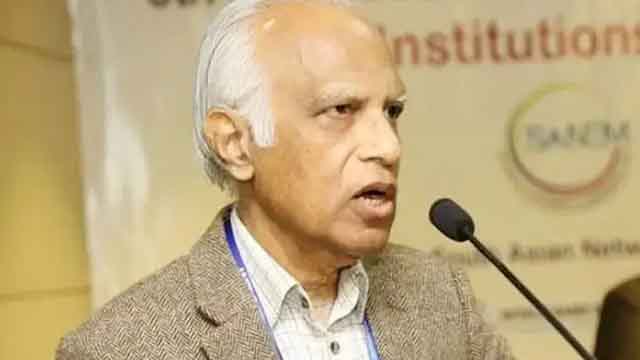
Planning Adviser Dr. Wahiduddin Mahmud has said that politics financed by illegal money inevitably leads to extortion, land grabbing, and abuse of power.
Speaking at the annual development conference organised by the Bangladesh Institute of Development Studies (BIDS) in Dhaka on Sunday, December 7, he said that such practices also harm the education sector, lowering quality and increasing dropout rates.
Wahiduddin emphasized that in the aftermath of July’s political unrest, the country should prioritize strengthening democracy, accelerating economic growth, and reducing poverty and inequality. “Even fifty years after independence, it is disappointing if development is pursued only within the framework of democracy,” he said.
On improving the investment climate, he noted that progress in a few indicators alone does not create a business-friendly environment. He stressed that sincere efforts in both politics and bureaucracy are essential for reforms to succeed.
Illegal political funding cannot be stopped by law alone; it requires political will, he said, adding that no country is too poor to meet its citizens’ basic needs, the real problem is lack of commitment.
Dr. Wahiduddin concluded that political integrity, strong institutions, and good governance are crucial for sustainable development and equitable progress.

Comment: