


The necessity of including women organizers in the sports arena of Bangladesh
Published:
২৩ ফেব্রুয়ারী ২০২৬, ১৭:৫৯
Currently, all the district and divisional sports organizations, district women's sports organizations, divisional women's sports organizations, upazila sports organizations and upazila women's sports organizations in the country are being dissolved and activities are being conducted through ad hoc committees. But in reality, it is seen that the visible activities of these ad hoc committees are very limited. No significant progress is being observed in the development of sports at the field level, organizing competitions or producing players.
In many cases, there have been allegations that nepotism and special interests have worked behind the formation of ad hoc committees. Especially in view of the Bangladesh Cricket Board (BCB) elections, some quarters have formed ad hoc committees as a strategy to establish their preferred candidates in the post of directors—a common belief in the sports arena.
After the change of government, the sports arena has got new leadership. In this changed context, it is essential to organize quick elections to make the country's sports structure effective and dynamic. If a committee elected through a democratic process is formed, accountability, efficiency and transparency will be ensured—which is very important for the development of sports.
Inclusion of women on the basis of equality: The need of the hour
Ensuring women's participation in the formation of new committees of district, divisional and upazila sports organizations is now the need of the hour. For a long time, women's representation in sports organizations has been very limited. Despite their qualifications, women cannot contest elections and secure a place due to various political polarization, factionalism and social barriers.
If representation on the basis of full equality is not possible, a policy decision can be taken to include at least 4-5 women members in a committee of 21 or 17 members. If necessary, a nomination system can also be put in place through the Ministry of Sports, so that an opportunity for assured representation is created for women.
It can be specifically proposed that the following women should be given priority in the committee—
1. Former national or regional level players
2. Coaches, referees or umpires
3. Women entrepreneurs or industrialists
Former players understand the reality of the field, coaches and referees are experienced in technical aspects, and women entrepreneurs or industrialists are able to provide financial and managerial support. This integrated structure can make sports organizations stronger and more effective.
Changing Sports Context and Women’s Advancement
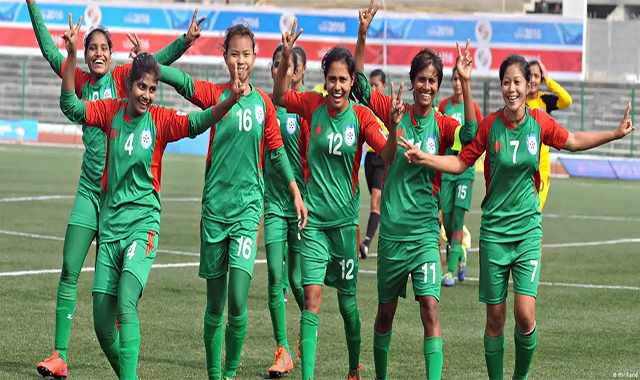
The sports landscape in Bangladesh is changing rapidly. Now families are encouraging their children to participate in sports. The participation of teenagers and young women in team sports like cricket, football and hockey has increased significantly. They are bringing success to the country in the national and international arenas.
Especially in domestic cricket leagues like National Cricket League (NCL) and Bangladesh Cricket League (BCL), women’s participation in age-based tournaments is increasing. But sadly, most of the time there is no trained female manager with the women’s team. In many cases, the responsibility is given to school and college games teachers or acquaintances who do not have professional experience as managers.
More worryingly, male managers and coaches often accompany the women’s team on tours. Although there are many qualified former female players in Bangladesh who are capable of performing managerial, coaching or administrative duties with skill; yet they are ignored.
In the past, allegations of harassment in women's sports have also come to the fore. In this context, ensuring the involvement of female managers, female coaches and female officials in women's events is not just a question of representation, but also a matter of safety and security.
Inclusive sports administration by eliminating discrimination
The inclusion of women in sports organizations is not just numerical representation; it is a prerequisite for building an inclusive, safe and efficient administrative culture. Due to the long-standing male-dominated structure, many talented female sports personalities have been left behind despite their interest.
To eliminate this inequality—
* Ensured representation of women in district, divisional and upazila sports organizations
* Making female managers and coaches mandatory in women's events
* Inclusion of former female players in administration
* Creating women organizers through training and leadership development programs
It is important to take these steps.
The sports arena in Bangladesh is at a turning point. With the participation of a new generation, women's success and social awareness—all of these things combined, now is the time to ensure a strong presence of women in sports administration on the basis of equality.
To build a strong, dynamic and equitable sports structure, women must be given the respect, opportunities and leadership they deserve. The inclusion of women organizers for the sustainable progress of sports is no longer a matter of delay - it is now the imperative demand of the hour.

Comment: