


Jamaat Issues 'Note of Dissent' on Key Issues
Special Committee Finalizes Review of 133 Ordinances
Published:
৩০ মার্চ ২০২৬, ১১:৫১
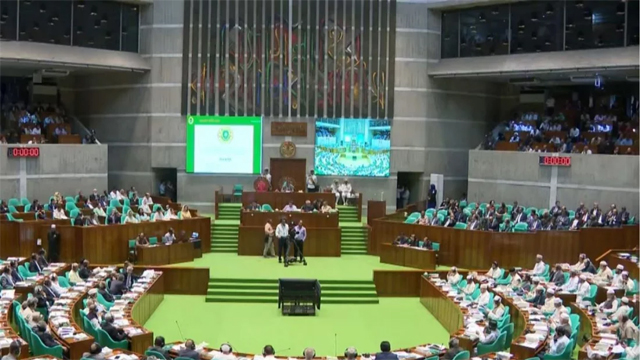
The Special Parliamentary Committee tasked with reviewing 133 ordinances issued during the interim government’s tenure concluded its evaluation late Sunday (March 29). The committee is scheduled to present its formal report to the Parliament on April 2, marking a critical step in the legislative transition.
Chaired by Zainul Abedin, the three-hour-long meeting at the National Parliament’s Cabinet Room witnessed a sharp divide between the treasury and opposition benches. Members of the opposition, primarily from Jamaat-e-Islami, issued 'Notes of Dissent' on approximately 15 ordinances. These include controversial amendments related to the National Human Rights Commission, the Police Commission, and the prevention of enforced disappearances.
A major point of contention arose regarding the 'Referendum' ordinance. Home Minister Salahuddin Ahmed clarified that since the referendum has already been conducted, there is no legal necessity to bring it forward as a Bill for ratification. However, MP Rafiqul Islam Khan of Jamaat-e-Islami rejected this stance, arguing that the results of the referendum represent the will of the nation and must be constitutionally upheld.
The opposition further accused the government of attempting to 'politicize' autonomous bodies. They raised strong objections to the proposed removal of the independent secretariat for the Supreme Court and the search committee for judicial appointments, which were initially introduced as reforms. "We will not compromise on issues that threaten the independence of the Anti-Corruption Commission or the judiciary," stated Rafiqul Islam Khan after the meeting.
Home Minister Ahmed, however, maintained that while some ordinances will be passed in their original form, others will undergo necessary amendments. The final legislative fate of these 133 ordinances will now be decided through debates and voting on the floor of the Parliament starting this Thursday.

Comment: