


DC conference: 50 closed, weak factories to be transferred to private sector within a year
Published:
৫ মে ২০২৬, ১১:১৯
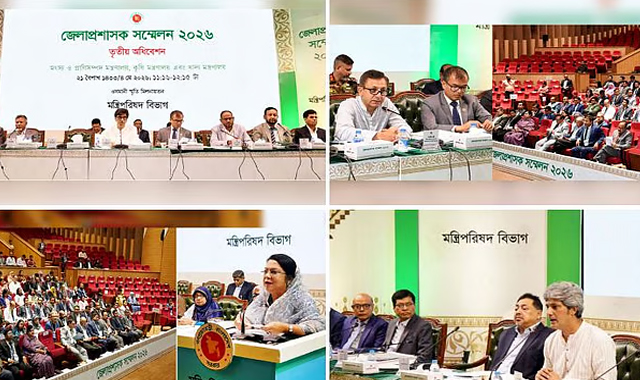
-
DCs proposed reviving old industries, setting up new industrial zones and reopening closed sugar mills in their respective districts
-
Govt to consider the proposals with due importance, industries and commerce minister says
Around 50 closed and weaker factories in terms of performance in the textile and jute sectors will be gradually transferred to the private sector within the next year, Commerce, Industries, and Textiles and Jute Minister Khandaker Abdul Muktadir has said.
He noted that the move is expected to attract fresh investment, boost production, and generate substantial employment opportunities.
The minister made the remarks at a press briefing on Monday following the fourth session of the second day of the ongoing Deputy Commissioners’ (DC) Conference at Osmani Memorial Auditorium in the capital.
Earlier, sessions involving the three ministries under his purview were held with the DCs.
The minister said the government is moving forward with a coordinated and timely action plan aimed at revitalising the industrial sector, maintaining market stability, and ensuring a secure supply of essential commodities.
Reopening closed and weaker industrial units to increase production and employment remains a key priority of the government, he added.
During the session, DCs presented proposals based on local realities, including reviving industries, establishing new industrial zones, and reopening closed sugar mills. The minister said these proposals would be given due consideration.
Speaking regarding the activities of Trading Corporation of Bangladesh (TCB), the commerce minister noted that a strong advisory council would be formed, comprising experts from both the public and private sectors.
The government is also planning to introduce a modern, technology-driven (AI-based) supply chain monitoring system to reduce price disparities from producers to retail levels, he added.
Highlighting preparations for the upcoming Eid al-Azha, the minister outlined a special action plan for preserving rawhide. Training will be provided—through district and upazila administrations—to individuals associated with mosques and madrasahs to prevent wastage. In addition, the government will ensure the supply of salt, distribute awareness leaflets, and conduct media campaigns.
Planning ministry preparing 2-year strategic framework
Following the DC Conference, State Minister for Planning Md Zonayed Abdur Rahim Saki spoke to journalists.
He said the government has placed strict emphasis on maintaining quality in development project implementation, reducing corruption, and ensuring timely completion.
He added that, in line with the government’s election manifesto and 31-point programme, the planning ministry is formulating a new two-year strategic framework. The framework aims to restore the crisis-hit economy inherited by the current government and ensure inclusive growth by reducing inequality.
According to the state minister, one of the government’s prime goals is to build a USD 1 trillion economy while creating 10 million jobs. To this end, future project approvals will prioritise employment generation and environmental impact.
Officials must serve, not rule: Speaker
Speaker of Parliament Hafiz Uddin Ahmad has said that DCs play a crucial role in strengthening democracy in the country. As returning officers during national elections, they have a significant responsibility in ensuring credible polls.
Speaking as the chief guest at an exchange meeting with deputy commissioners at the Jatiya Sangsad complex on Monday, the Speaker remarked that the election system during the past 16 years of Awami League rule had been marked by unprecedented irregularities and flaws.
He stressed that deputy commissioners can play a decisive role in ensuring free and fair elections, including parliamentary polls. To make democracy meaningful, he added, the bureaucracy must act responsibly, shifting from a culture of authority to one of public service.

Comment: