


Products likely to see price rise or fall
Published:
১১ জুন ২০২৬, ১৬:৪২
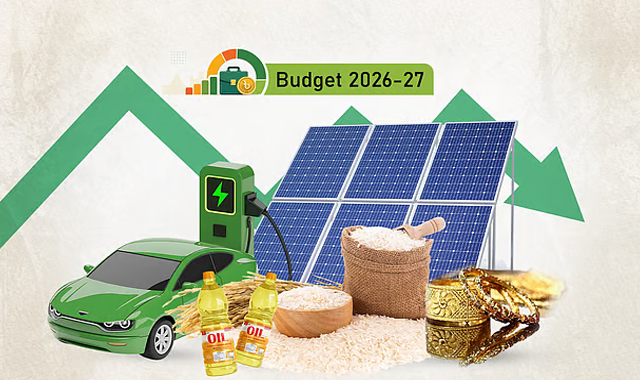
Finance Minister Amir Khasru Mahmud Chowdhury has placed the proposed budget for the fiscal year 2026–27 in the parliament.
He began presenting the budget proposal at around 3:00 pm today, Thursday.
This is the first budget of the BNP government's current term. The budget proposes tax and duty exemptions on various products and services, creating opportunities for lower prices of those items.
At the same time, duties and taxes on some products and services have been proposed to increase, raising concerns that their prices may also increase. The duty and tax proposals become effective immediately upon announcement in the budget.
Overall analysis shows that the number of products receiving tax reductions is higher.
Prices may increase
Cigarettes
The finance minister has proposed setting the minimum retail price of cigarettes at Tk 62 per 10 sticks for the low-tier segment, Tk 92 for the medium tier, Tk 160 for the high tier, and Tk 210 for the premium tier. As a result, cigarette prices will increase.
Describing nicotine granules and nicotine pouches as extremely harmful to public health, the finance minister has proposed imposing a 350 per cent supplementary duty on them.
Fuel-powered vehicles
To discourage the use of environmentally harmful diesel-, octane-, and petrol-powered vehicles, it has been proposed to increase the tax burden on imported internal combustion engine vehicles with engine capacities between 1,200cc and 1,600cc from 132.36 per cent to around 156 per cent. As a result, prices of such vehicles will rise.
Imported cashew nuts
To encourage domestic cultivation and production, import duties on raw and processed cashew nuts have been increased from 1 per cent and 5 per cent respectively to 25 per cent. However, for local producers, the import duty on raw cashew nuts has been set at 15 per cent. Overall, prices of imported cashew nuts will increase.
Imported pangas fillets
A 20 per cent supplementary duty has been imposed on imported pangas (pangasius) fish fillets to protect the domestic fish-processing industry.
Imported gas cylinders
Value-added tax (VAT) has been imposed at the import stage on composite LPG (liquefied petroleum gas) cylinders. This may increase their prices.
Imported honey
The minimum customs valuation for imported natural honey has been increased by $2 per unit to $7. As a result, higher duties and taxes will have to be paid on imports, potentially increasing prices.
Imported betel nuts
The minimum customs valuation for imported betel nuts has been increased by $0.25 per unit. This will increase the tax burden on imports.
Imported food products
Customs valuation rates have been increased for sugar confectionery, coffee, prepared foods, and similar products. This will increase the duty and tax burden on these imports.
Imported lip liners and lip gels
The customs valuation for lip liners, lip gels, and similar products has been increased.
Steel rods
VAT has been increased on various raw materials used in the production of steel rods. This may increase rod prices.
Others
Due to higher duties, taxes, and customs valuations, prices of imported tiles, sanitary ware and basins, imported foam products, imported microwave ovens, bicycles and bicycle parts, toys, and similar products may increase.
Prices may decrease
60 essential commodities
The finance minister has proposed reducing the source tax rate on 60 essential commodities—including paddy, rice, wheat, potatoes, livestock, poultry, fish, onions, garlic, ginger, salt, sugar, edible oil, and seeds—from 5 per cent, 2 per cent, and 1 per cent to 0.5 per cent.
He said that this measure, in line with the democratic government's election commitment, would bring relief to people's lives after years of uncontrolled price increases.
Baby food
Import duty on ingredients used in the production of baby food has been reduced from 15 per cent to 10 per cent (as industrial raw materials). The finance minister said this would lower baby food prices in the market.
Cumin and cinnamon
The 5 per cent regulatory duty on spices such as cumin, cinnamon, cardamom, cloves, black pepper, and coriander has been completely withdrawn.
Dates
The 5 per cent regulatory duty on imported dates has been completely withdrawn. As a result, prices may decrease.
Gold jewellery
The source tax rate on gold supply has been reduced from 5 per cent to 0.5 per cent. Previously, VAT was 5 per cent. As a result, VAT on gold worth Tk 250,000 would have been Tk 12,500, but it has now been reduced to Tk 2,500 per bhori.
Electric vehicles
Various incentives have been provided for electric vehicles (EVs), creating opportunities for substantial price reductions. In addition, major concessions have been granted on batteries and other equipment needed for EV charging stations.
For electric vehicles, the tax burden has been reduced from 93 per cent to 64 per cent for vehicles valued up to US$25,000 and to 80 per cent for vehicles valued up to US$50,000.
Tax incentives have also been provided for new plug-in hybrid electric vehicles (PHEV). The amount of advance income tax on registration and renewal with the Bangladesh Road Transport Authority (BRTA) has also been reduced for electric vehicles.
Laptops and computers
All import duties, regulatory duties, supplementary duties, and VAT on laptops, desktop computers, servers, computer printers, and computer monitors have been withdrawn.
Kidney dialysis services
The 15 per cent VAT and 5 per cent advance income tax on imported dialysis filters have been withdrawn. The finance minister said this would reduce the cost of each dialysis session for kidney patients by up to Tk 800.
Medicines
Various concessions have been granted on the import of pharmaceutical raw materials. In addition, preferential facilities have been provided for importing nine new raw materials used in the production of cancer medicines.
Musical instruments
The existing 5 per cent regulatory duty on guitars, pianos, violins, and other musical instruments, as well as their parts, has been completely withdrawn.
The import duty on cinematographic cameras and spare parts for cinematographic cameras and projectors has been reduced from 15 per cent to 5 per cent.
Others
Due to reduced duties and taxes and changes in customs valuations, prices of imported meat, animal feed, point-of-sale (POS) machines, solar power equipment, lipsticks, face wash products, and various other goods may decrease.

Comment: