


Interim govt period should be as short as possible: CA Yunus
Published:
১৪ নভেম্বর ২০২৪, ১৫:৪০
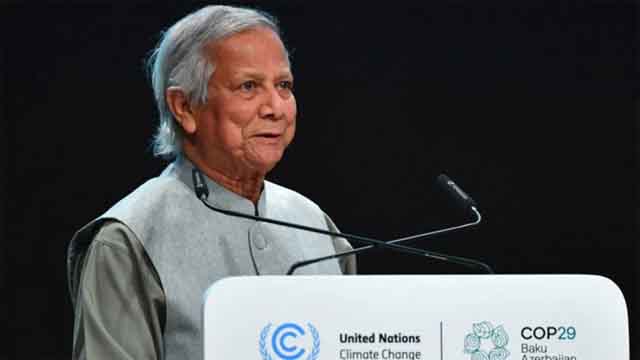
Bangladesh's interim leader Prof Muhammad Yunus told AFP on Wednesday that reforms are needed before his country can elect a government following the ouster of autocratic former ruler Sheikh Hasina.
The speed of reforms "will decide how quick the election will be," the Nobel Peace Prize winner and micro-finance pioneer said in an interview on the sidelines of the COP29 climate talks in Baku.
But he insisted that he would steer the country towards a democratic vote.
"That's a promise that we made, that as soon as we are ready, we'll have the elections, and the elected people can take over, run the country," he said.
He said the country needed to quickly agree on possible constitutional reforms, as well as the shape of the government, parliament and election rules.
Yunus said: "We are the interim government, so our period should be as short as possible."
Yunus was named to lead the government as "chief advisor" after a student-led uprising toppled Hasina in August.
Tens of thousands demonstrated in protests against job quotas that morphed into a nationwide struggle to end Hasina's 15 years of iron-fisted rule.
More than 700 people were killed, many in a brutal police crackdown, before Hasina fled to India by helicopter on August 5.
The country has struggled with instability since the ouster of Hasina, whose rule saw widespread human rights abuses, including the mass detention and extrajudicial killings of her political opponents.
"Any government would be concerned about stability. We are also," he said.
"We are hoping that we can sort it out and have a peaceful law and order," he added.
"It's only three months after the revolution."
The country of some 170 million people is struggling financially and, earlier this month, Indian firm Adani slashed cross-border electricity supply by half due to some $850 million in unpaid bills.

Comment: