
The US dollar edged higher against the taka as banks faced heavier foreign currency payments for fuel and other essential imports, central bank data showed.
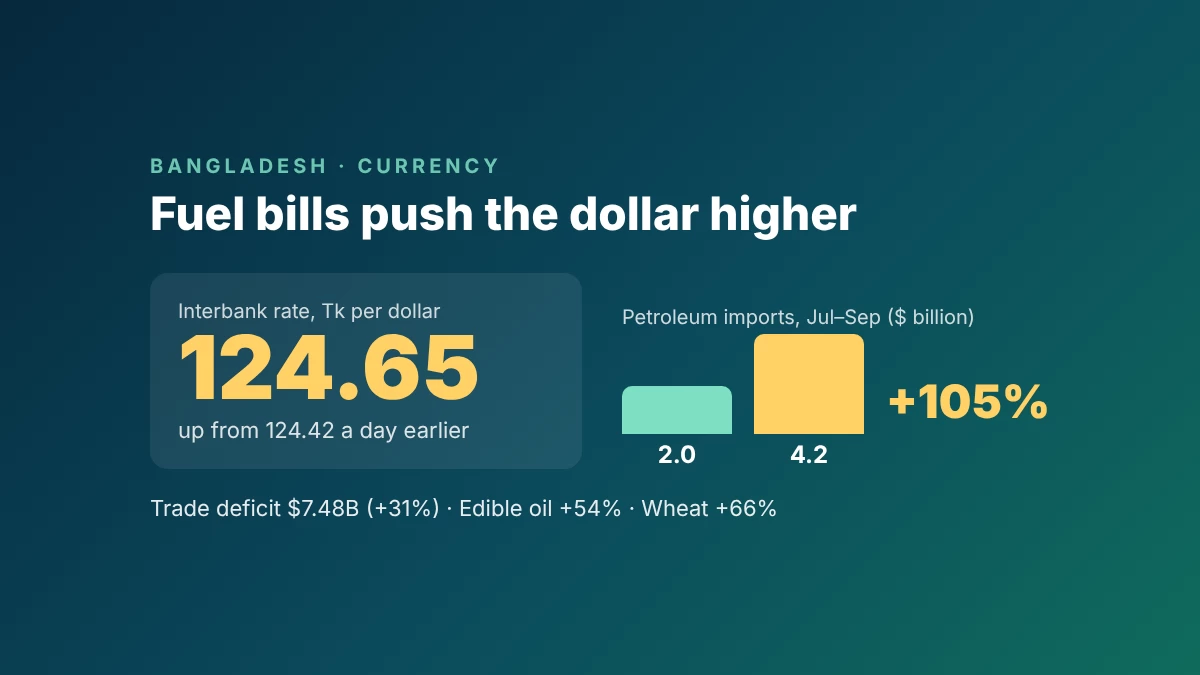
The weighted average interbank rate rose to Tk 124.65 per dollar on Wednesday from Tk 124.42 a day earlier. Most private commercial banks quoted the dollar at Tk 124.98 for spot selling and Tk 123.98 for spot buying.
Bankers said the rise mainly reflected higher payments for oil and gas imports, along with preparations for stronger demand for essential food items during Ramadan.
Bangladesh Bank data show that petroleum product imports jumped 105 percent from a year earlier to $4.2 billion in July-September, up from $2 billion. Fuel accounted for most of the growth in total imports. Edible oil purchases rose 54 percent and wheat imports increased 66 percent over the same period.
As the fuel import bill more than doubled, the trade deficit widened 31 percent year on year to $7.48 billion in the first quarter of the current fiscal year. Industry insiders linked part of the higher fuel cost to rising global prices amid the Iran war and tensions in the Middle East.
Banks opened letters of credit worth $7.32 billion in October and settled import bills of $5.95 billion, according to the central bank.
Bangladesh has faced foreign currency shortages and exchange rate pressure since 2022, when surging global commodity prices raised import costs and drained reserves. The taka traded at around Tk 85-86 per dollar in 2021 and has weakened several times since.
In a recent directive, Bangladesh Bank asked commercial banks to keep letter of credit cash margins for 10 essential food items at the minimum level, based on customer relationships. It also allowed commercial imports of these goods on deferred payment terms of up to 90 days through supplier or buyer credit. The measures are meant to ease immediate payment pressure, support supplies and help contain prices during Ramadan.