
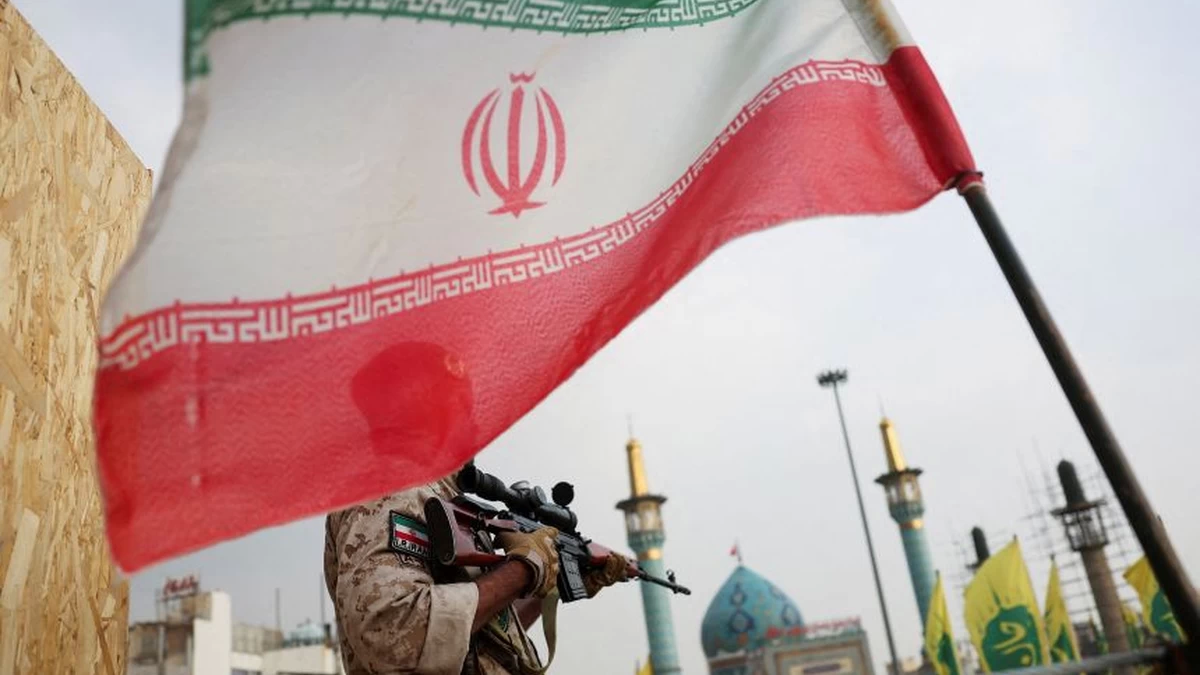
US President Donald Trump has given his clearest indication yet that intensified diplomacy could avert another major round of fighting with Iran, following his party's heavy losses in Tuesday's midterm elections. Trump said renewed US military attacks are highly unlikely if Tehran makes progress toward an agreement on its nuclear program and the reopening of the Strait of Hormuz, and that he is not looking to escalate the war. He has also made clear that the military option remains on the table.
Iran and the United States have been negotiating quietly on a sensitive agreement that could prevent a return to all-out war and open the door to broader talks. Qatar is mediating and circulating a framework document that both sides are amending. The process has been under way for weeks, possibly months, but has intensified in recent days amid fears of fresh strikes. Trump was expected to meet Qatari Prime Minister Sheikh Mohammed bin Abdulrahman al Thani in Washington on Monday.
Hopes of a deal are being tempered. Secretary of State Marco Rubio said on Sunday that he would not describe the sides as being on the verge of a breakthrough. He said Iran's demands were not just unacceptable but, in some cases, outrageous and unrealistic.
The Republican losses have added another dimension to the talks. Vice President JD Vance said afterward that the war was among the reasons his party lost, and Trump said he did not disagree, acknowledging that voters did not like the war. He nonetheless defended the decision to attack Iran, saying his answer would be an emphatic yes if he had to decide again. Iranian Foreign Minister Abbas Araghchi said American voters had made their choice and it was time for the White House to make its own.
Both sides have demands that look like non-starters to the other. Trump seeks to eliminate Iran's nuclear program, which Tehran sees as a matter of national sovereignty. Publicly, Iran says it will not negotiate over the program or reopen the Strait of Hormuz unless seven preconditions are met, including an end to the war on all fronts and the lifting of a maritime blockade. The specifics have not been made public. Hundreds of kilograms of enriched uranium remain hidden somewhere in Iran, and reports indicate Washington wants it diluted or moved to another country.
Iran also wants relief from US sanctions, which have made it increasingly difficult to sell crude, the release of billions of dollars in assets frozen in foreign banks, and compensation for the killing of Supreme Leader Ali Khamenei and his top military commanders by the US and Israel at the start of the war in February. Washington appears to be weighing some sanctions relief. Iran's Arab neighbors are divided over any deal that would give Tehran too much power, particularly its wish to administer the Strait of Hormuz.
There have been some attacks, but both sides have played them down, a possible sign that neither wants to derail the talks. Some reports say the talks have moved closer to agreement and that Iran is willing to re-engage on its nuclear program, though there has been no independent confirmation. The risk of all-out war remains real. Vessels carrying oil and gas through the Strait of Hormuz continue to come under Iranian attack, and the US has offered a reward of up to $20 million for information on Iran's nuclear program and launched a task force to block Tehran from moving advanced weapons over land routes.
Source: CNN