
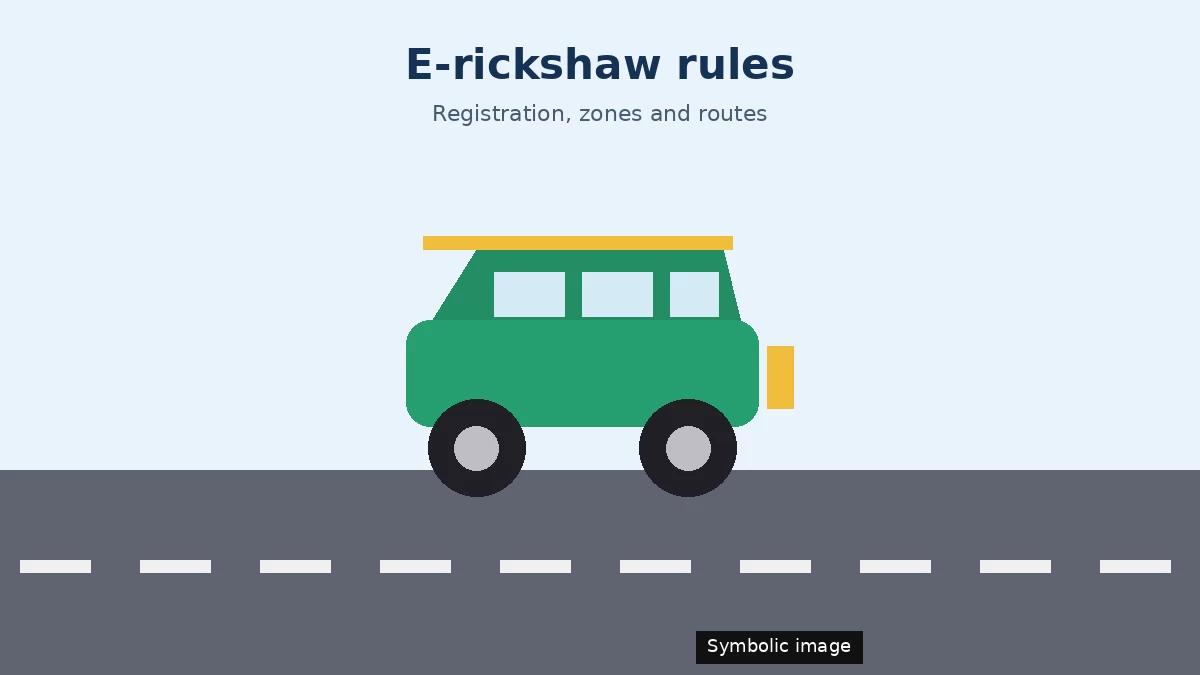
The government wants to remove many types of battery-run auto-rickshaws and introduce e-rickshaws built with technical support from BUET. Dhaka South City Corporation (DSCC) has begun selling registration forms for battery-run rickshaws, days after the Local Government Division issued rules on 29 October.
Several questions remain open. These include how many rickshaws will be allowed, how approved vehicles will be sourced and verified, and what will happen to the old ones. BUET sets the technical standards, but the list of manufacturers allowed to build e-rickshaws is not final. The boundaries of eight planned zones across the two Dhaka city corporations have not been drawn, and how movement will be controlled is unclear.
The rules, titled the Three-Wheeled Low-Speed Battery-Run Rickshaw Movement Rules in City Corporation Areas, 2026, apply in all city corporation areas. They define the vehicle as a battery-run e-rickshaw carrying two to four passengers at up to 25 kph. Registration is mandatory, and applicants need an NID card, a passport-size photo, a fee receipt and a fitness certificate. The authority will issue registration within 30 working days.
A two-passenger e-rickshaw costs Tk 8,000 to register, with an annual renewal of Tk 4,000. For a four-passenger vehicle, the fees are Tk 10,000 and Tk 5,000. The fitness certificate costs Tk 10,000. One NID can register up to five e-rickshaws, but a vehicle registered in one city cannot run commercially in another.
E-rickshaws are banned from national highways, expressways, elevated expressways and BRT roads. Routes will be set by zone, and a rickshaw approved for one zone cannot enter another. Speed is capped at 15 kph near schools, hospitals, places of worship and crowded areas.
Raihan Uddin, organiser of the Rickshaw, Battery-Powered Rickshaw-Van, and Easybike Sangram Parishad, says the rules are inconsistent, including on licence fees, and provide no driving licences for drivers. He calls the Tk 8,000 registration fee "too high." The owners' council says redesigning many rickshaws within a month or two is impossible and wants at least two years. It will hold a rally on 11 November and submit a memorandum to the administrators of both corporations.
BUET says it issues type approval for manufacturers' models, not individual vehicles. Prof Md Ehsan, head of the six-member design team, said, "We are not testing each rickshaw, nor are we supposed to." He said 10 to 12 manufacturers have taken clearance, including Dynamic Cars, Akij Motors, BivaTech and New Grameen Motors.
Md Yunus Chowdhury, an administrative officer at the Local Government Division, said there is no central database and no specific instruction on numbers. These will be decided at a review meeting within about a month. Md Anisur Rahman, additional commissioner (traffic) of the Dhaka Metropolitan Police, said there will be four zones in the north and four in the south. Under a phased plan, an owner with five rickshaws on one NID would surrender two old ones, take two new ones and keep running three old ones. Surrendered rickshaws will be scrapped, and no compensation will be paid.
DSCC Administrator Md Abdus Salam said the aim is to bring rickshaws under rules and registration step by step. The corporation sells Tk 100 forms from 10am to 3pm daily, except public holidays, at Nagar Bhaban and all zonal offices. About 700 forms had been sold, but no rickshaw had been registered yet. The Dhaka North City Corporation is still in preliminary preparations.