
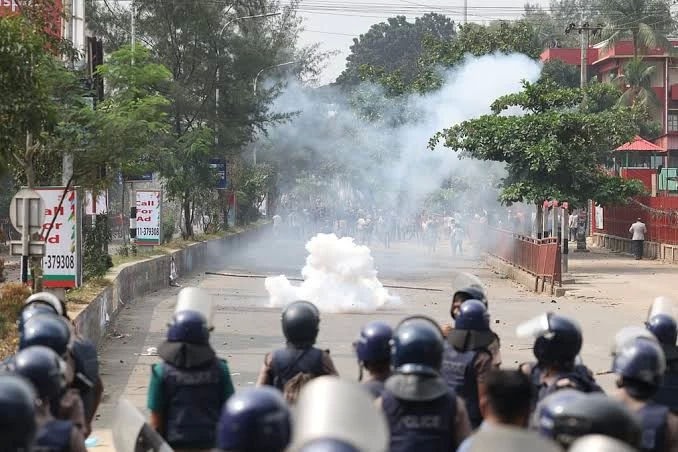
Work remained suspended at 59 garment factories in the Savar and Ashulia industrial belt on Saturday as labor unrest over wages dragged on, with 17 of the factories declared closed indefinitely.
Mohammad Mominul Islam Bhuiyan, superintendent of police of Ashulia Industrial Police-1, briefed reporters in the afternoon. He said 47 factories had already stopped work earlier. Of those, 18 were shut under Section 13(1) of the Bangladesh Labour Act because of the unrest, 17 were closed indefinitely, five were verbally declared closed and seven declared a general holiday. After work began on Saturday, another 12 factories where workers did not report for duty declared a holiday, bringing the total to 59.
The figures have shifted through the day. In the morning, police said at least 40 factories had been closed indefinitely, while five to six others had declared a general holiday because workers refused to work.
Section 13(1) of the Labour Act, 2006 allows employers to close an establishment fully or partly in the event of an illegal strike. Workers do not receive wages while a factory remains closed under the provision, which amounts to a no work, no pay rule. Khairul Mamun Mintu, legal affairs secretary of the Bangladesh Garments and Sweaters Workers Trade Union Centre, warned that invoking the provision could further fuel workers' anger and intensify the unrest.
The police official said the overall situation remained peaceful. No clashes or brickbatting were reported at any factory on Saturday. He said, however, that the situation was uncertain and that workers would face hardship if they continued to stay away, since many factories were closed and owners had also suspended operations at several others.
The Bangladesh Garment Manufacturers and Exporters Association (BGMEA) was holding discussions with factory owners over the issue. Police also arranged an awareness meeting at the industrial police office in the afternoon with garment worker federation leaders, law enforcement officials and local dignitaries. The aim, the official said, was to reach workers through their federations and urge them to return to work peacefully.
The unrest has been building for days across the garment hubs of Gazipur, Ashulia and Savar. Workers are demanding a minimum monthly wage of 30,000 taka, up from the current 12,500 taka. Reports said a wage board agreed on November 4 to raise the minimum wage after earlier protests, but the new rate is not due to be announced until December and would take effect in January, leaving workers uncertain about how much their pay would rise.
BGMEA President Mahmudul Hasan has said that negotiations at the wage board and unrest in factories cannot go on at the same time. Owners have warned that prolonged disruption hurts workers, factories and the wider economy, and could make foreign buyers question Bangladesh as a sourcing destination.